Introduction
Demand for on-demand CIOs, CTOs, and CISOs has grown sharply as organizations face leadership gaps, regulatory pressure, and technology transitions. What began as a niche consulting service has become a boardroom conversation: budget decisions around executive technology and security leadership now sit alongside capital allocation and legal exposure on the risk register.
Costs vary widely depending on the role, engagement type, scope, and the practitioner's depth of experience. A fractional CISO engagement in healthcare can run $15,000/month while a startup advisory retainer may cost $3,000/month. An interim CIO leading M&A integration can exceed $50,000/month, while a one-off board presentation may cost $800.
What follows covers real pricing ranges, the four cost models, what drives quotes up or down, and how to scope the right engagement for your situation.
TL;DR
- Fractional engagements run $2,000–$20,000+/month based on role, seniority, and scope
- Hourly advisory rates range from $200–$500
- Project-based engagements fall between $10,000 and $75,000+
- Regulated industries (healthcare, finance, retail) pay 15–30% more due to compliance complexity
- Organizations with clear scope and existing teams pay less
- At a $4.88M global average breach cost, engagement fees are rarely the bigger risk
What Does an On-Demand CIO, CTO, or CISO Actually Cost?
On-demand executive services do not carry a fixed price tag. Costs reflect the role, the depth of involvement required, and the organization's risk exposure—not just hours on a calendar.
Organizations underbudget by scoping for advisory hours but needing execution-level involvement. Others select the cheapest option and get someone without the credentials to represent them credibly to a board or regulator. Both mistakes are costly.
Pricing by Role
CIO, CTO, and CISO engagements carry different market rates reflecting distinct skill sets and responsibility profiles.
Fractional CISO:
- Monthly retainer: $3,000–$20,000
- By size: Startups (1-50 employees) $1,500–$4,000; Small business (50-200) $3,000–$7,000; Mid-market (200-500) $5,000–$12,000; Upper mid-market (500-1,000) $10,000–$20,000
- Hourly: $200–$400
- Annual cost: $36,000–$144,000 vs. $250,000–$500,000 for full-time hire
Fractional CTO:
- Monthly retainer: $8,000–$25,000 (most pay $12,000–$15,000)
- By stage: Startup $2,999–$5,999; Growth $6,000–$10,000; Enterprise $10,000–$15,000
- Hourly: $150–$500
- CTOs typically command the highest monthly retainers, reflecting the breadth of technology architecture decisions they own
Fractional/Interim CIO:
- Hourly: $200–$400
- Fractional (part-time, 1-3 days/week): $8,000–$15,000/month
- Interim (full-time, 3-12 months): $20,000–$35,000/month
- Enterprise Interim (M&A integration, complex transformation): $35,000–$50,000+/month
In regulated industries, CISOs often command the highest rates—driven by compliance liability and direct board reporting accountability. Healthcare breach costs average $9.77M, making an underqualified security leader a direct financial liability.
Pricing by Engagement Band
Role-based rates tell you what the market charges. Engagement bands tell you what you're actually getting for that spend.
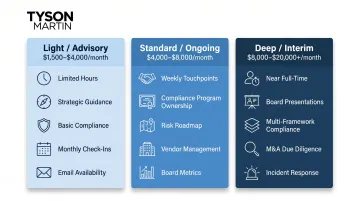
Light/Advisory Tier ($1,500–$4,000/month):
- Limited monthly hours (typically 5-10)
- Strategic guidance only
- Basic compliance framework
- Monthly check-in calls
- Email availability
- Best for: Startups and small businesses with simple environments needing policy foundation
Standard/Ongoing Tier ($4,000–$8,000/month):
- Regular executive touchpoints (bi-weekly or weekly)
- Full compliance program ownership (SOC 2, HIPAA, NIST CSF)
- Owns technology or risk roadmap with measurable milestones
- Vendor risk management
- Quarterly board metrics
- Best for: Mid-market organizations with established IT teams needing strategic oversight
Deep/Interim Tier ($8,000–$20,000+/month):
- Near full-time involvement
- Board presentations and audit committee interface
- Multi-framework compliance
- M&A cyber due diligence
- On-call incident response availability
- Security budget planning
- Organizations in transition, under regulatory audit, or facing leadership vacancies typically land here—because the cost of getting this wrong exceeds the engagement fee by an order of magnitude
The Four Pricing Models for On-Demand Executives
How you pay matters as much as what you pay. The same scope can be structured very differently, with real implications for budget predictability and alignment of incentives.
Monthly Retainer
The retainer model is the most common structure for fractional engagements. Organizations pay a fixed monthly fee for defined access, ongoing deliverables (risk posture updates, board briefings, strategic roadmaps), and prioritized availability.
Typical ranges:
- CISO: $3,000–$20,000/month
- CTO: $8,000–$25,000/month
- CIO: $8,000–$15,000/month (fractional); $20,000–$35,000/month (interim)
Advantages: Cost predictability, continuous institutional knowledge, consistent executive presence for board and audit cycles.
Hourly or On-Call Rate
Organizations pay only for time used, suited to episodic needs like a specific risk assessment, a board presentation, or a gap analysis.
Typical hourly rates:
- CISO: $200–$400/hour
- CTO: $150–$500/hour
- CIO: $200–$400/hour
- Overage billing during incidents: $250–$400/hour
Risk: Ad-hoc usage can accumulate cost faster than a retainer if needs are ongoing. A practitioner without environment knowledge takes longer to produce results than someone embedded via retainer.
Project-Based (Fixed Fee)
A fixed fee tied to a defined deliverable works best for scoped initiatives with clear boundaries.
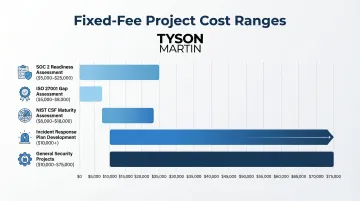
Common project types and ranges:
- SOC 2 readiness assessment: $5,000–$25,000
- ISO 27001 gap assessment: $5,000–$8,000
- NIST CSF maturity assessment: $8,000–$18,000
- Incident response plan development: Starting at $10,000
- General fixed-scope security projects: $10,000–$75,000
Clear scope is non-negotiable. A "SOC 2 readiness assessment" without defined boundaries can quietly expand into a full implementation program — and the costs follow.
Hybrid Model
A base retainer covering strategic continuity plus additional fees for defined projects or escalated involvement.
The retainer covers the steady-state work — board reporting, quarterly risk updates, executive availability. Project fees layer on top for defined events:
- SOC 2 certification or gap remediation
- M&A due diligence and integration risk review
- Incident response activation
This structure works best for organizations whose needs spike around audits, board cycles, or security events. Scaling up doesn't require renegotiating the entire engagement.
Before selecting a model, one terminology distinction affects every option above.
Interim vs. Fractional: Know Which One You Need
"Interim" and "fractional" are not the same. Interim typically means near-full-time engagement filling an acute vacancy — higher rates, defined end date, immediate execution focus. Fractional means ongoing part-time strategic leadership across a longer horizon.
Misclassifying the need leads to overpaying or being under-resourced when it counts. An organization navigating an active incident or six weeks from a regulatory audit needs hands-on involvement, not quarterly check-ins.
Key Factors That Affect Your Quote
Pricing ultimately mirrors the risk the practitioner is being engaged to manage—not just the hours on the calendar. Organizations that understand these drivers get better quotes and more accurate budget forecasts.
Role Scope and Deliverable Expectations
Scope drives cost. A CISO engaged only for quarterly board reporting costs significantly less than one responsible for continuous risk monitoring, vendor management, incident response readiness, and regulatory audit support.
Narrow scope example:
- Quarterly board briefing
- Annual risk assessment review
- Policy review and update
- Email advisory availability
- Cost: $3,000–$5,000/month
Full-spectrum involvement example:
- Weekly executive touchpoints
- Continuous risk posture monitoring
- Vendor risk program ownership
- Board and audit committee reporting
- Incident response plan maintenance
- Regulatory exam preparation
- Security budget planning
- Cost: $12,000–$20,000/month
The difference is not just hours—it's accountability. Full-spectrum engagement means the practitioner owns outcomes, not just advice.
Organization Size, Complexity, and Compliance Burden
Organizations with legacy systems, distributed environments, multiple jurisdictions, or regulated data (healthcare, financial services, retail) require more practitioner time and carry higher compliance overhead.
Regulated industries command a 15-30% premium over non-regulated environments. A healthcare CISO engagement at $15,000/month reflects the $9.77M average breach cost in healthcare—the highest of any industry for 14 consecutive years.
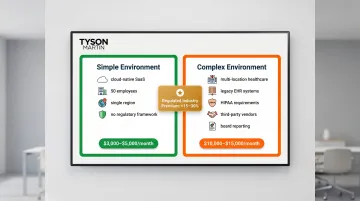
Simple environment: Cloud-native, single-region SaaS company with 50 employees, existing IT team, no regulatory framework. Fractional CISO cost: $3,000–$5,000/month.
Complex environment: Multi-location healthcare provider with legacy EHR systems, HIPAA compliance requirements, third-party vendor ecosystem, and board reporting needs. Fractional CISO cost: $10,000–$15,000/month.
Why it matters: HHS has collected $144.9M in HIPAA penalties across 152 settlements. A single enforcement action can exceed the entire annual cost of fractional security leadership.
Practitioner Credentials and Enterprise Experience
Credentials (CISSP, CISM, board-level governance experience) and enterprise-scale background directly affect rates.
Certification salary benchmarks:
- CISSP holders earn $147,757 average in North America
- CCSP: $148,009
- CISM: $191,653
Enterprise CISO compensation context: Heidrick and Struggles' 2024 survey of 416 CISOs found US average total compensation of $1,648,000. Practitioners who have operated inside Fortune 100 environments, led security through major incidents, or served on national advisory bodies bring a different caliber of judgment than someone with only SMB exposure.
That gap shows up in price and in speed to value. Practitioners with enterprise-scale governance experience — including Fortune 100 and hyperscaler environments — typically arrive with a 90-day plan, defined owners, and measurable outcomes from day one. That structure cuts the ramp time that makes less experienced fractional engagements expensive in the early months.
Engagement Duration and Continuity
Longer engagements produce better value per dollar. The practitioner builds context over time and spends fewer hours re-learning the environment on every call.
Organizations that scope too short often re-engage at premium rates for follow-on work. A capable internal security lead can reduce fractional hours by 30-40% — meaning internal bench strength and long-term continuity compound each other.
12-month retainer: $10,000/month x 12 = $120,000 total, with institutional knowledge building over time.
Multiple discrete projects: Three separate $25,000 engagements = $75,000, but each requires re-onboarding and lacks continuity between initiatives.
The retainer costs more on paper. It delivers more in practice — the practitioner knows your team, your risk posture, and your board's tolerance before the next incident happens.
How to Build a Smart Budget for an On-Demand Engagement
The right budget is not the lowest price—it is the one calibrated to what the organization actually needs to reduce risk, meet compliance requirements, and give the board credible oversight.
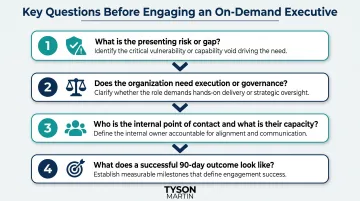
Answer these questions before engaging:
- What is the presenting risk or gap? (leadership vacancy, compliance deadline, incident recovery, M&A)
- Does the organization need execution or governance?
- Who is the internal point of contact and what is their capacity?
- What does a successful 90-day outcome look like?
A well-scoped engagement with measurable outcomes — a defined roadmap, a board-ready risk dashboard, clear escalation thresholds — keeps spend accountable because you can inspect progress at every milestone.
How to evaluate quotes:
- Ask for deliverables, not just hours
- Confirm what is included vs. billed separately (tool licenses, travel, incident response activation)
- Request a not-to-exceed clause for project-based work
- Assess whether the practitioner has operated at the level they are being engaged to advise at
The single most common cost driver in on-demand engagements is an undefined scope — not the practitioner's rate. Locking in milestones, owners, and inspection points before the contract is signed is what separates a controlled engagement from one that drifts.
What Most Organizations Get Wrong About On-Demand Executive Costs
Most organizations focus on the line item — the monthly retainer — and miss the three decisions that determine whether the engagement actually delivers. Here's where things go wrong:
- Optimizing for price instead of outcomes. A cheap retainer that produces vague reports, no board-ready communication, and no measurable risk reduction costs more than a higher-quality engagement that changes behavior and improves posture. The cybersecurity skills gap contributed an average of $1.76M in additional breach costs, and more than 50% of breached organizations face severe security staffing shortages — a 26.2% increase from the prior year. The cost of no credible security leadership far exceeds any fractional engagement fee.
- Choosing advisory when the need is interim. Organizations that have just lost a CISO, are navigating an active incident, or are six weeks from a regulatory audit need execution-level involvement — not quarterly check-ins. Selecting the wrong engagement type is the costliest mistake organizations make, and it's also the most avoidable.
- Treating the engagement as a one-time fix. Security and technology governance are not static. Organizations that engage a fractional executive for six months, hit a compliance milestone, and then disengage often find themselves rebuilding from a lower baseline a year later. Plan for ongoing governance, not just episodic fixes.
Frequently Asked Questions
How much does an on-demand CISO cost?
On-demand CISO engagements typically run $3,000–$20,000/month depending on organization size, scope, and regulatory requirements. Regulated industries (healthcare, finance, defense) command 15-30% premiums due to compliance liability. Hourly rates of $200–$400 and project-based fees of $10,000–$75,000 offer alternatives for limited needs.
What is the difference between CTO, CIO, and CISO?
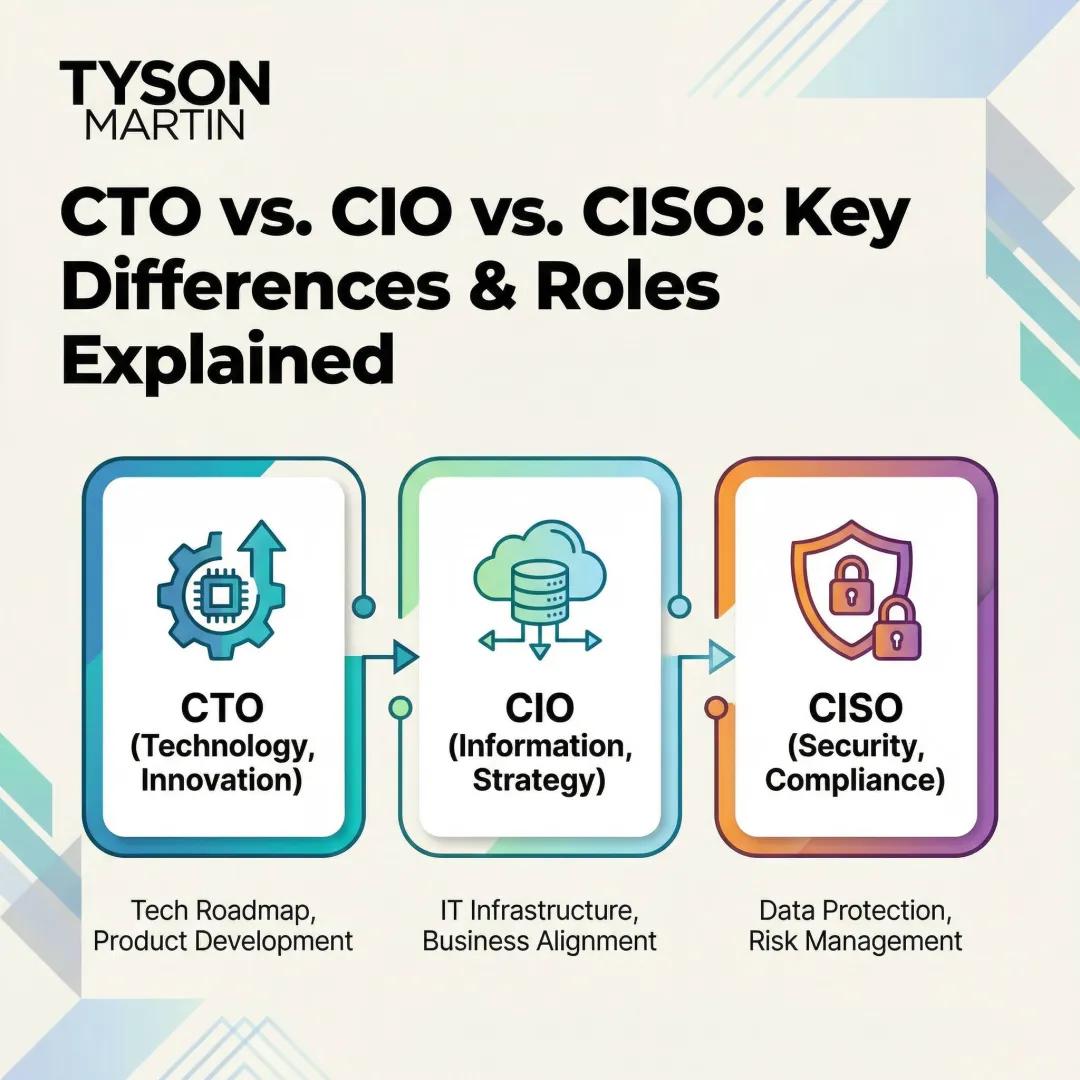
The CIO owns information systems and technology operations, the CTO drives technology strategy and product architecture, and the CISO owns cybersecurity risk, compliance, and governance. Pricing reflects scope: CTOs command the highest standard monthly retainers ($8,000–$25,000), while CISOs reach the highest rates in regulated industries due to compliance liability.
Is a fractional executive the same as an interim executive?
Fractional means ongoing part-time strategic leadership (typically a defined number of hours per month), while interim means near full-time engagement filling an acute vacancy. Interim engagements generally cost more ($20,000–$50,000/month for CIOs) due to higher time commitment and execution-level involvement.
What should be included in a fractional CIO, CTO, or CISO engagement?
A well-structured engagement delivers a defined scope, regular executive touchpoints, board-ready reporting, a risk or technology roadmap, and measurable 90-day milestones with clear owners and escalation thresholds — not open-ended advisory access.
What is the top-down approach to information security?
A top-down approach means security governance is driven from board and executive leadership down through the organization, establishing clear decision rights, escalation thresholds, and accountability rather than reactive management at the technical level. An on-demand CISO is engaged specifically to implement this structure so risk decisions carry explicit authority.
When does it make sense to hire a full-time CISO instead of an on-demand one?
Organizations with daily, complex security operations, large internal security teams requiring direct management, or mature programs needing continuous hands-on executive presence typically reach a point where a full-time hire is justified. An on-demand or fractional CISO often serves as the bridge that builds the program and defines what the full-time hire should look like.