Introduction
Healthcare leaders are dealing with aging IT infrastructure, HIPAA and HITECH mandates that grow more complex each year, ransomware incidents that affected 69% of patient records in 2024, and EHR implementations where 40% miss their goals. These aren't isolated problems—they all demand the same thing: executive-level IT leadership with strategic vision, regulatory fluency, and vendor accountability.
Most health systems, specialty practices, and community clinics can't sustain that leadership full-time.
The cost of getting this wrong is not hypothetical. Healthcare data breaches now cost an average of $9.77 million per incident, and EHR project failures can set organizations back years in operational capability and millions in wasted investment. Yet recruiting a full-time CIO takes 90 to 120 days on average, with compensation packages reaching $600,000+ for experienced healthcare IT executives.
This guide gives healthcare decision-makers what they need to evaluate fractional CIO services with confidence—from what the role actually covers to what it costs and how to vet candidates.
TLDR
- A fractional CIO delivers senior IT leadership on a part-time basis—strategic guidance without the full-time cost
- Their work spans HIPAA compliance governance, cybersecurity oversight, EHR strategy, vendor management, and board-level reporting
- Costs run $3,000–$15,000 monthly compared to $300,000–$600,000+ for full-time CIOs—and engagements begin in weeks, not months
- Strong fractional CIOs leave behind governance structures and IT roadmaps that hold after they're gone
What Is a Fractional CIO in Healthcare?
A fractional CIO is a senior IT executive who works on a part-time, retainer, or project basis, providing the strategic leadership of a full-time CIO without the permanent headcount cost.
Unlike junior consultants or staff augmentation resources, a fractional CIO owns the IT strategy, reports to the CEO or board, and makes executive-level decisions on technology investments, vendor relationships, and governance.
Healthcare Is a Distinct Context
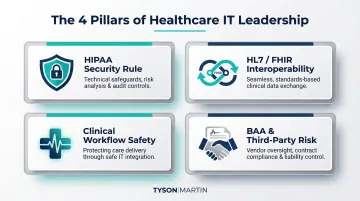
What makes healthcare fractional leadership different from general IT consulting is the regulatory and clinical complexity. A fractional CIO serving a health system, ambulatory clinic, or specialty practice must understand:
- HIPAA Security Rule requirements and how they map to technical safeguards
- HL7/FHIR interoperability standards that govern how patient data moves between systems
- Clinical workflows where technology failures directly impact patient safety
- Business associate agreements (BAAs) and the third-party risk chain inherent in healthcare vendor relationships
General IT credentials don't transfer here. Healthcare fractional CIOs need demonstrated regulatory fluency and clinical system expertise — the kind that holds up when OCR comes calling or an EHR migration goes sideways.
Fractional vs. Interim: Different Models for Different Needs
The terms are often confused, but the distinction matters:
- Fractional CIO: Works part-time (typically 10–20 hours per week) across potentially multiple clients simultaneously, providing ongoing strategic guidance on a retainer or project basis
- Interim CIO: Fills a full-time leadership vacancy temporarily, often during a search or organizational transition
For healthcare organizations that need senior IT strategy without a leadership vacancy to fill, fractional is typically the right model. Common triggers include EHR migrations, OCR audit preparation, and board-level cyber risk governance — situations that demand executive judgment, not just project management.
What Does a Fractional CIO Do in Healthcare?
Oversee IT Strategy and Governance
A fractional CIO develops and owns the organization's technology roadmap, aligning IT investments with clinical and operational priorities. Every technology decision ties back to patient outcomes, cost containment, and risk reduction.
That means defining what gets funded, what gets delayed, and what gets cut — then translating those executive priorities into executable plans with clear owners and measurable milestones.
HIPAA and Regulatory Compliance Leadership
A fractional CIO owns the compliance posture for healthcare IT, including:
- HIPAA Security Rule requirements (risk assessments, workforce training, incident response)
- HITECH Act breach notification obligations
- State-level health privacy laws that now exist in over 20 states
- 21st Century Cures Act interoperability mandates and information blocking rules
This includes policy development, conducting or overseeing risk assessments, managing business associate agreement oversight, and preparing the organization for audits or OCR investigations. In 2024, HHS OCR brought 22 HIPAA enforcement actions, collecting $9.9 million in settlements—making compliance leadership a material board-level issue.
Cybersecurity Governance and Incident Readiness
Healthcare is one of the most targeted sectors for ransomware and data breaches. Medical records sell for $260–$310 on the dark web compared to $30–$50 for credit cards, driving relentless attacks against health systems. A fractional CIO establishes security frameworks, defines escalation thresholds, and ensures the board receives plain-language reporting on cyber risk—not just technical metrics that obscure accountability.
Key responsibilities include:
- Risk governance: Translating technical vulnerabilities into business impact language
- Incident response readiness: Establishing clear escalation paths and decision rights before incidents occur
- Board reporting: Providing stable dashboards that show trend and exposure, not just activity metrics
- Third-party risk management: Overseeing vendor security controls and BAA compliance
EHR and Clinical System Oversight
Many fractional CIO engagements are triggered by EHR transitions, integrations, or optimization efforts. Since 2022, 40% of healthcare leaders reported significant misses in their EHR implementations—a failure rate that reflects what happens when these projects lack executive-level oversight. The fractional CIO governs vendor selection, implementation governance, and clinical staff adoption, preventing the cost overruns and workflow disruptions that commonly derail these projects.
Vendor Management and Contract Governance
A fractional CIO consolidates the vendor landscape, reviews contracts, and ensures SLAs align with operational and compliance requirements. In healthcare, third-party relationships — billing systems, telehealth platforms, lab integrations — carry significant regulatory and operational risk.
Without senior oversight, vendor sprawl creates compliance gaps, redundant costs, and unclear accountability when incidents occur.
Why Healthcare Organizations Need Strategic IT Leadership Now
Regulatory Complexity Is Accelerating
Healthcare IT leaders must now navigate a regulatory environment that extends far beyond HIPAA. The 21st Century Cures Act interoperability mandates—including TEFCA network participation, information blocking rules, and FHIR API requirements—are now enforced with real financial consequences. OIG civil monetary penalties for information blocking can reach $1 million per violation, and CMS Medicare disincentives went into effect in 2024, creating direct financial risk for providers who fail to comply.
State-level health data privacy laws add another layer. As of 2026, twenty states have comprehensive privacy laws in effect, and healthcare-specific regulations—such as Washington's My Health My Data Act and California's AB 45—impose restrictions beyond federal HIPAA requirements. Organizations without executive-level IT leadership routinely miss compliance deadlines, misread enforcement guidance, and absorb penalties that proper governance would have prevented.
The Cybersecurity Threat Is Specifically Targeting Healthcare
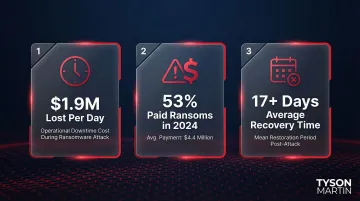
Healthcare organizations face disproportionate cyberattack risk due to the high value of patient data, aging infrastructure, and the operational urgency that makes ransomware payments more likely. Healthcare organizations lose an average of $1.9 million per day to downtime during ransomware attacks, with average recovery taking over 17 days.
53% of healthcare organizations admitted to paying ransoms in 2024, with average payments reaching $4.4 million. Boards and executive teams are increasingly being held accountable for these outcomes. SEC cybersecurity disclosure rules require public companies to describe board oversight of cyber risk, and OCR enforcement actions explicitly target leadership failures to conduct required risk analyses. When a breach occurs without documented board-level oversight, leadership carries personal exposure—not just organizational liability.
The Full-Time CIO Talent Market Is Difficult and Slow
A traditional CIO search in healthcare can take six months or more, requires significant compensation packages, and carries retention risk. In 2024, 22% of enterprise healthcare CIOs earned over $600,000 annually, and median pay sits around $295,000 before benefits and recruiting fees. Many smaller health systems, community clinics, and specialty practices cannot compete for this talent—leaving them without strategic IT leadership for extended periods.
The average time to recruit a permanent CIO runs 90 to 120 days, and 53% of current healthcare CIOs assumed their roles in the past three years, indicating high turnover and a volatile talent market. For organizations facing urgent compliance deadlines, pending EHR rollouts, or board presentations on cyber risk, this timeline is unworkable.
Organizations in Transition Carry Elevated IT Risk
New leadership, M&A activity, EHR migrations, or shifts to value-based care models create IT instability. These periods require a senior IT executive who can establish governance quickly—not a six-month search followed by a six-month onboarding process. Without executive IT leadership during transitions, organizations typically see:
- Technology decisions made in silos, without cross-functional alignment
- Vendor relationships expanding without oversight or contract discipline
- Compliance gaps widening as deadlines pass without ownership
- Risk posture eroding faster than the board realizes
This is precisely where fractional CIO engagement delivers its clearest value: experienced leadership, available immediately, without the six-month search.
Fractional CIO vs. Full-Time CIO: The Healthcare Decision
Cost Comparison
Full-time CIO compensation in healthcare ranges from $300,000 to $600,000+ in base salary before benefits, equity, and recruiting costs. Fractional arrangements typically cost $3,000–$15,000 per month, depending on scope and hours. Healthcare-specific expertise—requiring HIPAA and interoperability fluency—commands a $5,000–$7,000 monthly premium over baseline fractional rates. Even at the high end, annual fractional costs ($180,000) run substantially below full-time compensation, with no benefits overhead or recruitment fees.
Speed to Value
A fractional CIO can typically begin active engagement within 48 hours to two weeks, whereas a traditional full-time search takes 90 to 120 days minimum. For healthcare organizations with an urgent compliance deadline, a pending EHR rollout, or a board presentation on cyber risk, this speed differential is material. Fractional engagements can deliver a board-ready security strategy with milestones and cost bands within 90 days—often before a traditional search would yield its first finalist.
What Fractional Does Better
Fractional CIOs bring cross-organization experience that a single full-time hire cannot match. Having worked across health systems, payer organizations, and specialty practices, they've seen more failure modes and tested more governance models — pattern recognition that reduces risk when it matters most.
That breadth translates into concrete advantages:
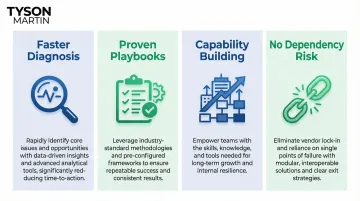
- Faster diagnosis of governance gaps, technology debt, and compliance exposure across different org types
- Proven playbooks for EHR transitions, audits, and cyber incidents drawn from real engagements
- Institutional capability-building — governance documentation, decision frameworks, and staff development embedded so leadership changes don't create operational disruption
- No dependency risk — engagements are structured so the organization retains what's built, regardless of whether leadership transitions to a full-time CIO
When a Full-Time CIO Still Makes Sense
Some organizations will need a permanent hire. The clearest signals:
- IT departments of 50+ staff requiring consistent daily executive presence
- Complex multi-site infrastructure where on-site leadership is non-negotiable
- A CIO role deeply embedded in clinical governance with standing committee obligations
For most others, fractional serves as either a bridge — establishing governance quickly while a deliberate full-time search runs in parallel — or a durable long-term model for organizations that never need full-time overhead.