Introduction
Most organizations that struggle with fractional C-suite hires get the hiring part right and the structuring part wrong. A fractional executive brought in without a clear mandate and decision rights quickly becomes an expensive consultant who attends meetings but doesn't move the needle — costing more in lost momentum than the engagement saves in salary.
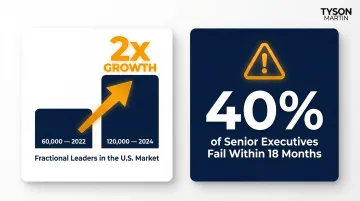
The market for fractional leadership has surged: fractional leaders doubled from 60,000 in 2022 to 120,000 in 2024, driven by rising demand for technology and cybersecurity expertise in regulated industries and organizations undergoing transition. Yet 40% of senior executives fail within the first 18 months, often because the engagement was poorly structured from day one.
This article delivers three specific hiring strategies for boards and executive teams that need technology or cyber risk leadership without a full-time commitment: defining the mandate before the search, structuring decision rights into the contract, and measuring outcomes rather than hours.
TLDR
- Fractional C-suite roles provide genuine executive authority, not just advisory access — but only when structured correctly from the start
- Strategy 1: Define the mandate and decision rights before you search
- Strategy 2: Match the engagement model to your stage and risk profile
- Strategy 3: Hire for board-ready communication, not just technical credentials
- Scope gaps and weak board communication are the top failure modes in CISO, CIO, and CDO engagements
- Getting this right means fewer surprises, faster escalation, and clear accountability at the executive level
What Makes Fractional Leadership "Tactical" — and When to Use It
Fractional leadership is not advisory work. A fractional executive owns outcomes, manages people or processes, sits in leadership meetings as a full team member, and is accountable for a defined function — not just recommendations. They carry the weight of a role, not the distance of a consultant.
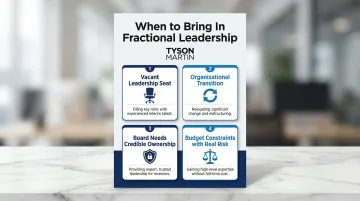
The right moment to bring in fractional leadership is usually one of the following:
- A critical leadership seat is vacant and the full-time search will take months
- The organization is navigating a transition — M&A, regulatory pressure, incident response, or rapid growth
- The board or executive team needs credible ownership of a function, not just an outside opinion
- Budget doesn't support a full-time C-suite hire, but the risk of leaving the role unfilled is real
That context shapes how you hire, structure, and integrate fractional executives — which is what the three strategies below are designed to address.