CTO advisory provides organizations with strategic technology leadership without hiring a full-time Chief Technology Officer. It includes technology strategy development, digital transformation guidance, IT governance frameworks, vendor evaluation, and executive coaching. The service is designed for boards and leadership teams that need technology expertise calibrated to their organization's maturity, market pressure, and risk tolerance, delivered through fractional engagement models with clear deliverables and accountability.
What is the role of CTO advisory?
The CTO advisory role includes translating business objectives into executable technology strategies, establishing decision rights and escalation frameworks, evaluating build-versus-buy trade-offs, overseeing technology vendor relationships, and providing board-level reporting on digital investments and technical risk. The advisor acts as a strategic partner to the CEO and board, ensuring technology decisions align with revenue goals, regulatory requirements, and competitive positioning while delegating operational execution to internal IT teams.
When should an organization engage a fractional CTO advisor?
Organizations benefit from CTO advisory services during digital transformation initiatives, M&A technology due diligence, executive leadership transitions, rapid scaling phases, or when facing regulatory compliance pressure. It's particularly valuable when the business needs strategic technology guidance but doesn't require daily on-site CTO presence, or when the existing technology leadership needs board-level communication support and governance expertise to manage complex digital initiatives effectively.
How does CTO advisory differ from IT consulting?
CTO advisory focuses on strategic leadership, decision-making frameworks, and governance rather than implementation. While IT consulting typically delivers specific technical projects or staff augmentation, CTO advisory establishes technology strategy, prioritizes investments, defines success metrics, and provides executive oversight. The advisor serves as a trusted leadership partner with accountability for outcomes, not a vendor selling services. Engagements include board reporting, risk appetite setting, and executive coaching alongside technical strategy.
What deliverables can I expect from a CTO advisory engagement?
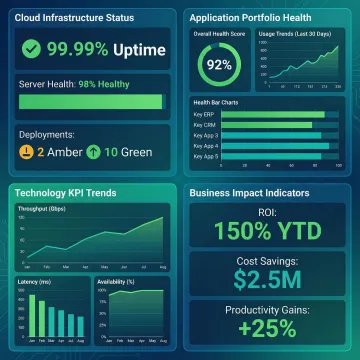
Typical deliverables include a 90-day technology roadmap with clear owners and milestones, board-ready dashboards showing technology health and investment ROI, decision rights documentation defining who approves what, vendor rationalization assessments with cost-benefit analysis, technology risk registers with business impact translation, and executive briefing materials. All deliverables emphasize actionable insights over technical documentation, with metrics that prove progress and enable informed decision-making at the board level.
How is technology risk measured in business terms?
Technology risk is translated into business impact by quantifying potential downtime costs, revenue dependencies on critical systems, customer data exposure scenarios, regulatory penalty exposure, and competitive disadvantage from technical debt. The CTO advisor creates board-ready reporting that shows acceptable risk thresholds, trend analysis over time, and clear accountability for risk mitigation. This approach replaces technical jargon with financial impact, enabling boards to make informed trade-off decisions between innovation speed and stability.
Can a fractional CTO work alongside an existing IT director or VP of Engineering?
Yes, fractional CTO advisory is designed to complement existing technical leadership by providing strategic oversight, board communication expertise, and governance frameworks that internal teams may lack. The advisor focuses on decision rights, vendor strategy, digital transformation roadmaps, and executive reporting while delegating operational execution to the existing IT organization. This model strengthens the internal team's effectiveness by providing senior-level guidance, removing ambiguity from prioritization, and establishing accountability mechanisms that prove value delivery.
What is the typical engagement model for CTO advisory services?
CTO advisory engagements are typically structured as monthly retainers with defined scope, deliverables, and success metrics. The model includes regular executive briefings, board meeting attendance, strategic planning sessions, and on-demand advisory support for critical technology decisions. Engagements range from interim leadership during transitions (3-6 months) to ongoing fractional partnerships (12+ months). All arrangements include clear 30-60-90 day milestones, KPIs to measure risk reduction and value delivery, and transparent communication about what's in scope versus what requires additional resources.